
You know you want images that look like “yours,” but you would struggle to say what that actually means, and you assume it takes a designer. It does not. Here is a plain answer to what makes a branded image look like it belongs to your business, without a style guide, a design background, or a photo shoot.
5 minute read · Published by Momentium AI Team
Quick Answer
An image looks like it belongs to your business when it is consistent and intentional, when it looks chosen to reflect this business rather than pulled at random from the same library everyone uses. What makes images feel branded is not expense or polish; it is a recognizable, repeated style across the images you use. None of that requires being a designer.
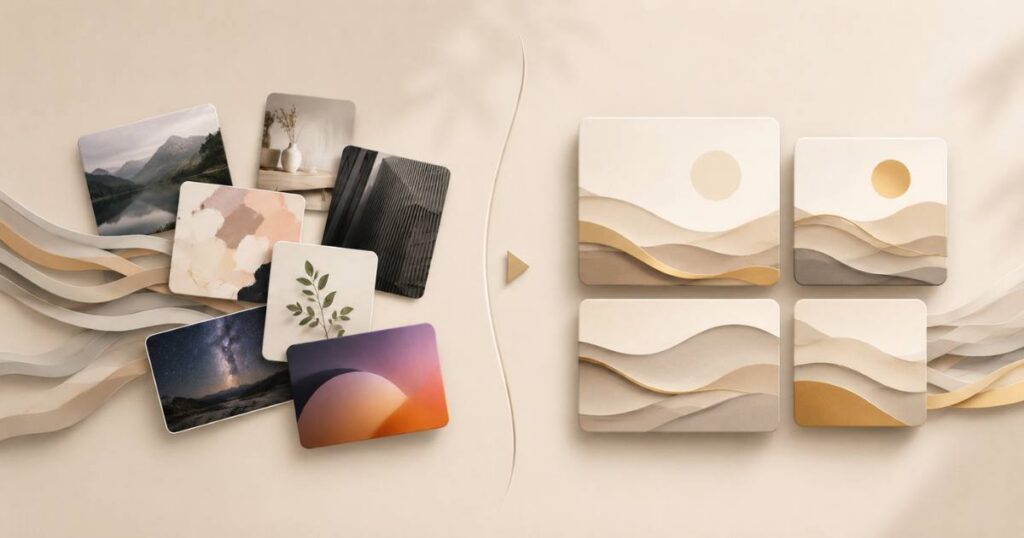
What Makes an Image On-Brand?
A branded image is one that looks chosen to reflect this specific business, not grabbed from the same stock library everyone shares. That is the whole idea: intentional, and recognizably yours.
The word that matters here is “belongs.” An on-brand image belongs to your business the way your storefront or your voice on the phone does. A generic stock photo belongs to no one, which is exactly why it does so little.
Consistency Over Polish
What makes images feel branded is not expense or perfection. It is a recognizable, repeated feel, a consistent style, palette, and mood, across the images you use.
Several decent images that clearly look like a set beat one slick image that looks borrowed. Polish on a single image fades fast; consistency across many images is what a reader starts to recognize as yours. This isn’t about expensive or perfect images. It’s about images that are recognizably yours.
Intent and Relevance
A branded image reflects something true about the business, its actual work, its tone, its style, rather than a generic scene that could front any company. It should add meaning, not just fill the space above the text.
When an image is chosen with intent, it does a small job: it tells the reader, before they read a word, that a real and specific business is behind this. A random stock image tells them nothing, or worse, that you are the same as everyone else.
What “Looks Like It Belongs” Looks Like
In practice, on-brand images come down to a few simple habits:
- A steady visual style, warm and human, or clean and precise, whatever genuinely fits your business, used consistently.
- Images that suit the content they sit with, rather than decoration bolted on top.
- A deliberate avoidance of the obvious generic tropes everyone else reaches for.
The encouraging part is that this is achievable now without a camera crew. Branded images can be created to fit your business’s style and content deliberately, no photo shoot or design skills required. That is the work behind branded AI image creation: images made to belong to your business.
If you would like a read on whether your current images look like a set or a jumble, a content review can cover that too.
Recognizable, Not Expensive
A consistent visual style will not transform your results on its own, and “on-brand” does not mean expensive or perfect. It means recognizable and intentional, built up over time. Once your images consistently look like yours, your business starts to look like itself across everything it publishes.
Momentium AI helps small businesses create branded images built around their work and used consistently, as part of a managed, AI-assisted, human-led approach. The honest line holds: visuals are one signal among several, not a guarantee of results, but looking recognizably like yourself is worth more than looking like everyone else.
Found this useful? Pass it on.